Home/Live Matches/Live Fantasy Points IPL Match Strategy: Real-Time Captain Switch Guide for PokerBaazi11
Live Fantasy Points IPL Match Strategy: Real-Time Captain Switch Guide for PokerBaazi11
A complete live fantasy points IPL match strategy playbook for PokerBaazi11 users: how live points update, when to switch captain mid-match, how to use ball-by-ball data, contest-specific in-play tactics, and a checklist you can run from the first over through the death overs to climb the leaderboard in real time.
Compliance Notice: Focus11 is a skill-based fantasy sports platform operating in India. This product is available only to users 18+ in permitted states. Fantasy sports involve skill and strategy; outcomes depend on real-world match performance. Please play responsibly. Check local regulations before participating.
How live fantasy points work on PokerBaazi11: the real-time scoring engine explained
How live fantasy points flow from ball-by-ball events into your PokerBaazi11 leaderboard position.
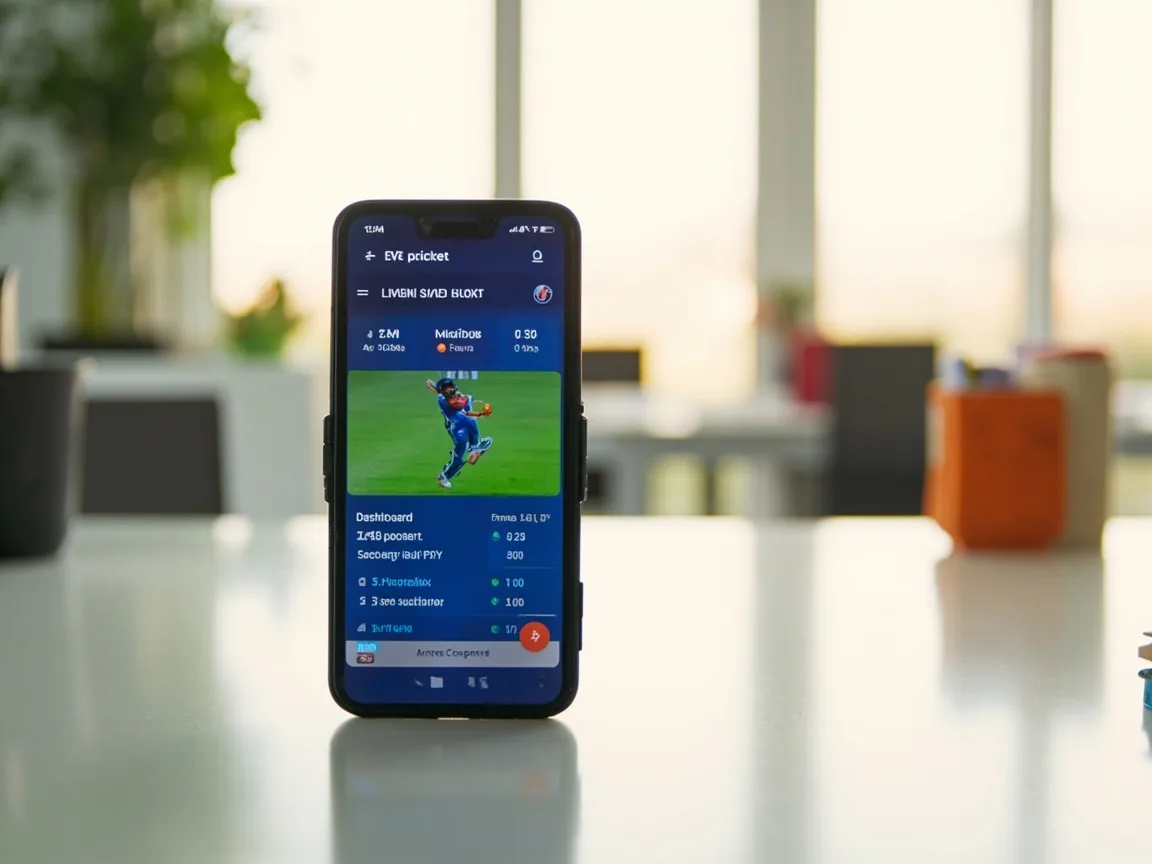
Live fantasy points on PokerBaazi11 update ball-by-ball from the official IPL data feed. Every run scored, every wicket taken, every catch completed, and every dot ball bowled flows through the scoring engine and lands on your contest leaderboard within 3-7 seconds of the actual on-field event. For PokerBaazi11 users, this creates a fundamentally different fantasy experience than the locked-at-toss format: your team is alive throughout the match, and your leaderboard position moves in real time.
The scoring weights on PokerBaazi11 follow the standard fantasy cricket matrix: 1 point per run, 4 points per boundary, 6 points per six, 10 points per wicket (T20), 4 points per catch, and -2 points per duck. Captain selections get a 2x multiplier and vice-captain gets 1.5x. These multipliers stay locked once the match starts — the difference between formats is that you can substitute players (in contests that allow it) but cannot change captain mid-match on most PokerBaazi11 contests. Read the contest rules carefully before locking your XI.
The data feed updates in two phases on PokerBaazi11: phase 1 (first 6 overs, powerplay) updates every ball within 5 seconds, phase 2 (middle and death overs) updates every ball within 3-7 seconds depending on the broadcaster's feed latency. For practical purposes, this means your captain's score is reflected on the leaderboard almost in real time, and you can watch your rank move ball by ball in the live-matches dashboard. Understanding the feed latency is critical for in-play strategy decisions.
The 5-second decision window: how to read live points during the powerplay
The powerplay (overs 1-6) is the highest-leverage window for live points on PokerBaazi11 because every ball can swing your captain's score by 4-10 points. If your captain is opening the batting and hits a boundary on ball 1, you gain 8-12 leaderboard positions within 5 seconds. If your captain is bowling and takes a wicket in the powerplay, you gain 15-25 positions. The flip side: a golden duck for your captain costs you 20-30 positions, and a wicket-less over from your captain bowler costs you 5-10 positions.
For PokerBaazi11 users, the practical read during the powerplay is to monitor three numbers in real time: captain points, vice-captain points, and the gap to the next rank above you. The cap-vc gap tells you whether to push or hold. If your captain is firing and the gap is 5-10 points, you're climbing — hold your XI and watch the rank tick up. If your captain is firing but the gap is 30+ points, you need a sub (if your contest allows it) or a Hail Mary from a differential pick.
Don't over-react to one ball. The variance in powerplay scoring is high: a batter can hit a four then get out next ball, swinging 16 points in 12 seconds. The right read on PokerBaazi11 is the rolling 12-ball window — if your captain has 30+ points after 12 balls, you're on track; if your captain has 10-15 points, you're behind pace but not out; if your captain has 0-5 points, you need a plan B from your differentials. The powerplay ends at over 6, and the middle-overs scoring tempo is different (lower run rate, more spin wickets).
Mid-match captain strategy: when to consider a vice-captain boost or contest-specific swap
Mid-match captain strategy on PokerBaazi11 - when to switch and when to hold.
Most PokerBaazi11 contests lock the captain and vice-captain at toss — you cannot change them mid-match. The exceptions are "live swap" contests (rare, premium entry) and practice/freeroll contests where the swap window opens after the powerplay. For the standard locked-captain format, your only mid-match levers are: (1) bench player substitutions (if your contest allows it), (2) reading the live points to decide your next match's captain, and (3) tracking differential ownership to spot when the field is climbing past you.
If your contest allows bench swaps (most practice and some premium contests), the swap window typically opens after over 6 and closes at over 14. The optimal swap decision on PokerBaazi11: if your captain has 30+ points at the powerplay break, hold — the captain multiplier (2x) compounds through the death overs. If your captain has 10-15 points, swap to the in-form differential from your bench who is currently 25+ points higher than the original captain's expected trajectory. If your captain has 0-5 points, swap aggressively to a differential with momentum.
The vice-captain read on PokerBaazi11 mid-match: your VC gets 1.5x, so a VC on 30 points contributes 45 effective points. If your VC is firing and your captain is slow, you can climb leaderboard positions just from the VC differential — every boundary your VC hits is worth 6 points vs 4 for a non-multiplied player, and a VC fifty is worth 75 effective points. The VC is your "hidden captain" in contests where the captain stalls, and the best PokerBaazi11 players build their XI around a strong captain-VC pairing where both players have ceiling games.
Ball-by-ball scoring math: boundaries, wickets, dot balls, and strike-rate bonuses
The PokerBaazi11 scoring engine rewards boundaries more than running: a four contributes 4 runs + 4 boundary bonus = 8 points, a six contributes 6 runs + 6 six bonus = 12 points. Compare to three runs through running = 3 points. The implied value of a boundary is roughly 2.5x a running single. For live-matches strategy, this means captains who play aggressive shots (Suryakumar, Pant, Russell) have a higher expected points-per-ball than anchors (Virat, Gill, Rahul) even when their strike rates look similar.
Wicket points on PokerBaazi11 stack: 10 points for a bowler's wicket + 4 points for a catch (fielder) + 4 points for a stumping (keeper) + LBW bowled bonus 2 points. A bowler taking a wicket contributes 12-16 points to your XI in a single ball. For live-matches strategy, monitor which bowlers are getting wickets: a bowler on a hat-trick ball is worth 30+ points in 6 seconds, and the differential bowler who picks up 3 wickets in 4 overs is worth 50-70 points by the 8-over mark.
Strike-rate bonuses on PokerBaazi11 (when available in contest rules) add 4-6 points for batters scoring at SR 150+ in T20s and 2-4 points for bowlers at economy under 6 in T20s. These bonuses compound with the captain multiplier. A captain scoring 50 off 25 balls (SR 200) with 6 boundaries and 3 sixes = 50 runs (50) + 6 fours bonus (24) + 3 sixes bonus (18) + SR bonus (6) = 98 base points × 2 captain = 196 effective points. The SR bonus is the hidden edge that aggressive batters give you on PokerBaazi11.
Contest-specific live strategy: head-to-heads vs small leagues vs mega contests
Contest-specific live strategy - head-to-head, small league, mega contest - on PokerBaazi11.
PokerBaazi11 contests split into three live-matches strategies. Head-to-heads (Rs 1 - Rs 100 entry, 2 users): watch the opponent's captain score in real time, your edge is consistency not ceiling. If both captains are firing, you lose on tiebreakers (boundary count, then six count, then strike rate). Pick a captain with high floor over high ceiling in H2H contests. The live read matters less — the lock-in decision matters more.
Small leagues (3-50 users, Rs 10 - Rs 1000 entry): live-matches strategy matters because every boundary shifts your rank. Pick a captain with ceiling potential (Hardik, Russell, Pant, Maxwell, SKY) and watch the live feed aggressively. In a 10-user contest, climbing from rank 8 to rank 3 in the powerplay is achievable with a strong captain over. The live read here is critical: every 5-second decision window matters.
Mega contests (1000+ users, Rs 1 - Rs 10000 entry): live-matches strategy matters because rank movement is harder. Climbing 50 ranks in a mega contest requires 30-50 points of captain swing, which means you need both captain firing AND differential picks firing. The live read on mega contests is: monitor the captain (your rank anchor) and 1-2 differentials (your rank climbers). When a differential starts firing, ride the wave. When a differential stalls, mentally move on and watch the captain.
The contest-mapping decision matrix on PokerBaazi11: H2H = captain with high floor + lock-and-leave strategy, small league = captain with ceiling + live-feed monitoring, mega contest = captain + 2 differentials + live-feed monitoring. The lock-in decision (captain pick before toss) matters more than the live-feed decision in all three formats, but the live-feed read gives you a 5-10% edge that compounds across hundreds of contests per IPL season.
In-play data signals: pitch map, wagon wheel, and batter matchup read
The PokerBaazi11 live dashboard gives you four data signals beyond just the score: pitch map (where each ball was bowled, color-coded by line/length), wagon wheel (where each batter hit the ball, color-coded by runs scored), bowler speed (in km/h for each delivery), and batter matchup (batter vs specific bowler historical record). For live-matches strategy, the pitch map is the highest-leverage signal because it tells you which bowlers are bowling to which zones and which batters are exploiting the zones.
Reading the pitch map on PokerBaazi11 mid-match: if a pace bowler is bowling 80% short balls and the batter is pulling 60%+ of them, the batter is "in the zone" — the next short ball is likely a six. Captain this batter aggressively. If a spinner is bowling 70% flighted deliveries on off stump and the batter is reverse-sweeping 50%+ of them, the spinner is being read — captain the batter who is dominating that matchup. The pitch map is the live equivalent of having a ball-by-ball ball-tracking analyst.
The wagon wheel on PokerBaazi11 shows shot distribution: a batter with 80% of runs on the leg side is playing to one zone; a batter with even distribution is harder to set fields to. Captain the batter with even distribution in the death overs because fielding captains can't plug all zones. The wagon wheel also shows scoring tempo: a batter with 80% of runs in boundaries is high-ceiling (and high-volatility), while a batter with 50% in running is high-floor.
Death-overs live-matches strategy: when the captain's role changes mid-match
Death-overs live strategy on PokerBaazi11 - when the captain's role shifts.
The death overs (17-20) are where live-matches scores on PokerBaazi11 move the fastest: every ball swings 8-15 points, every six swings 25-35 points, every wicket swings 20-30 points. The captain who is at the crease at over 17 is positioned for a 30-80 point swing in 24 balls. If your captain is batting in the death overs on PokerBaazi11, the live read is: monitor balls remaining vs balls faced. If 18 balls remain and 24 balls available, the captain has 75% chance to face 18+ balls — high expected points.
The role-change mid-match on PokerBaazi11: a captain who started as an opener but was dismissed in the powerplay is now a zero-contributor (0 more points possible). A differential pick who came in to bat at #6 in the 14th over and is now set at the crease at over 17 is positioned for a ceiling game. The live read is to monitor which bench/differential players are at the crease in the death overs and ride their momentum through the final 4 overs.
The bowling side death-overs read on PokerBaazi11: a captain bowler bowling in the death overs (17-20) is positioned for 12-16 dot balls (worth 0 each), 1-2 wickets (worth 10-12 each), and economy bonus if under 6 runs/over. A death-overs specialist captain (Bumrah, Pathirana, Archer) typically returns 30-60 points in the death overs alone, which can move your rank by 50-100 positions in a mega contest. The live read: when your captain bowler is handed the ball in over 17, watch the over-by-over points update.
Common live-matches mistakes on PokerBaazi11 and how to avoid them
The first common mistake is over-monitoring the live feed and stress-trading. PokerBaazi11 contests are locked at toss for captain/VC; you cannot change them mid-match. Watching the live feed obsessively when you cannot change anything increases stress without improving outcomes. The right read: check the live feed 3-4 times per match (powerplay break, 10-over mark, 15-over mark, death overs), not every ball. Over-monitoring is a cognitive cost with no upside.
The second common mistake is misreading the leaderboard tiebreakers. PokerBaazi11 mega contests use rank tiebreakers in this order: total points, then boundary count, then six count, then strike rate. If you and a competitor have the same total points, the boundary count decides. Captain aggressive batters (SKY, Pant, Maxwell) over anchors (Virat, Gill) when chasing a tiebreaker. The live read: when you're climbing to a tiebreaker, count boundaries not just runs.
The third common mistake is forgetting the role-change risk. A captain who started as a bowler but got hit for 30 runs in 2 overs may be pulled from the attack — his expected points drop from 30-50 to 0-10. The live read on PokerBaazi11: monitor the bowler's over-by-over economy and wickets. If the economy crosses 10+ in the first 2 overs, expect the captain to be pulled. Have a backup plan for which differential pick could compensate (your death-overs batter, your spinner differential).
Live-matches data sources and timing: official IPL feed vs PokerBaazi11 dashboard latency
The PokerBaazi11 live feed is sourced from the official IPL data feed with a 3-7 second latency. For most live-matches decisions, this latency is irrelevant — the captain's points 5 seconds after a boundary are still your captain's points. The latency matters for two specific scenarios: (1) when you have a contested catch/stumping (the third umpire review can flip a wicket from out to not-out 30-90 seconds later, swinging 12-16 points), (2) when you have a no-ball/wide-ball decision (a no-ball gives 1 run + 1 extra + free-hit, which the feed updates within 5-10 seconds of the umpire signal).
For practical purposes, the PokerBaazi11 feed is fast enough for all live-matches captain decisions. The only decisions where latency matters are contest-specific: in H2H contests where every ball matters, the 5-second delay can cause you to under-react to a fast boundary-six sequence. The fix: don't make live decisions based on a single ball — wait for the over to complete before re-assessing. Over-by-over decisions are more reliable than ball-by-ball decisions on a 5-second-delayed feed.
The dashboard updates on PokerBaazi11 include: captain score (every ball, 3-7 sec delay), leaderboard rank (every ball, 3-7 sec delay), projected final score (every 3 overs, based on current run rate), and contest-specific stats (your contest rank vs the field, every ball). Use the projected final score as a sanity check on your captain's trajectory. If the projected score is below 30 by the 10-over mark, your captain is in trouble and you should mentally move to your differentials as the rank-climbers.
Frequently asked questions about live fantasy points and IPL match strategy on PokerBaazi11
How often do live fantasy points update on PokerBaazi11?
Live fantasy points on PokerBaazi11 update every ball within 3-7 seconds of the actual on-field event. The powerplay (overs 1-6) updates slightly slower (5-7 sec) due to higher ball frequency, while middle and death overs update faster (3-5 sec). Your leaderboard position reflects these updates in real time, so you can watch your rank tick up or down ball-by-ball throughout the match.
Can I change my captain mid-match on PokerBaazi11?
On most PokerBaazi11 contests, captain and vice-captain are locked at toss — you cannot change them mid-match. The exceptions are premium "live swap" contests (rare, higher entry fees) and practice/freeroll contests where the swap window typically opens after over 6 and closes at over 14. Read the specific contest rules before locking your XI to confirm whether swaps are allowed.
What's the best live strategy for mega contests on PokerBaazi11?
For mega contests (1000+ users), the best live strategy is: monitor your captain (your rank anchor) and 1-2 differentials (your rank climbers). When a differential starts firing, ride the wave and watch the rank. When a differential stalls, mentally move on and focus on the captain. Check the live feed 3-4 times per match (powerplay, 10-over, 15-over, death overs) rather than every ball to reduce stress and improve decision quality.
How do I use the pitch map and wagon wheel on PokerBaazi11?
The pitch map shows where each ball was bowled (color-coded by line/length), and the wagon wheel shows where each batter hit the ball (color-coded by runs). For live strategy, use the pitch map to spot batters who are dominating a specific bowling zone (e.g., 60%+ pull shots off short balls). Use the wagon wheel to spot batters with even scoring distribution (harder to set fields to) vs batters concentrated on one side (easier to set fields to).
When is the best time to check my live rank on PokerBaazi11?
Check your live rank 3-4 times per match: at the powerplay break (over 6), the 10-over mark, the 15-over mark, and the death-overs start (over 17). Avoid checking every ball because (a) the 5-second feed delay makes ball-by-ball decisions unreliable, and (b) over-monitoring increases stress without improving outcomes. The over-by-over check captures 90% of the rank movement with 10% of the cognitive cost.
Should I captain an aggressive batter or anchor on PokerBaazi11?
Captain aggressive batters (Suryakumar, Pant, Russell, Maxwell) for small leagues and mega contests where ceiling matters and tiebreakers are decided by boundary count. Captain anchors (Virat, Gill, Rahul) for head-to-head contests where consistency matters and tiebreakers are rare. The captain's role also depends on matchup: captain an anchor if the pitch is a batting paradise (more balls to face, more running points), captain an aggressive batter if the pitch has variable bounce (more boundaries, more six points).